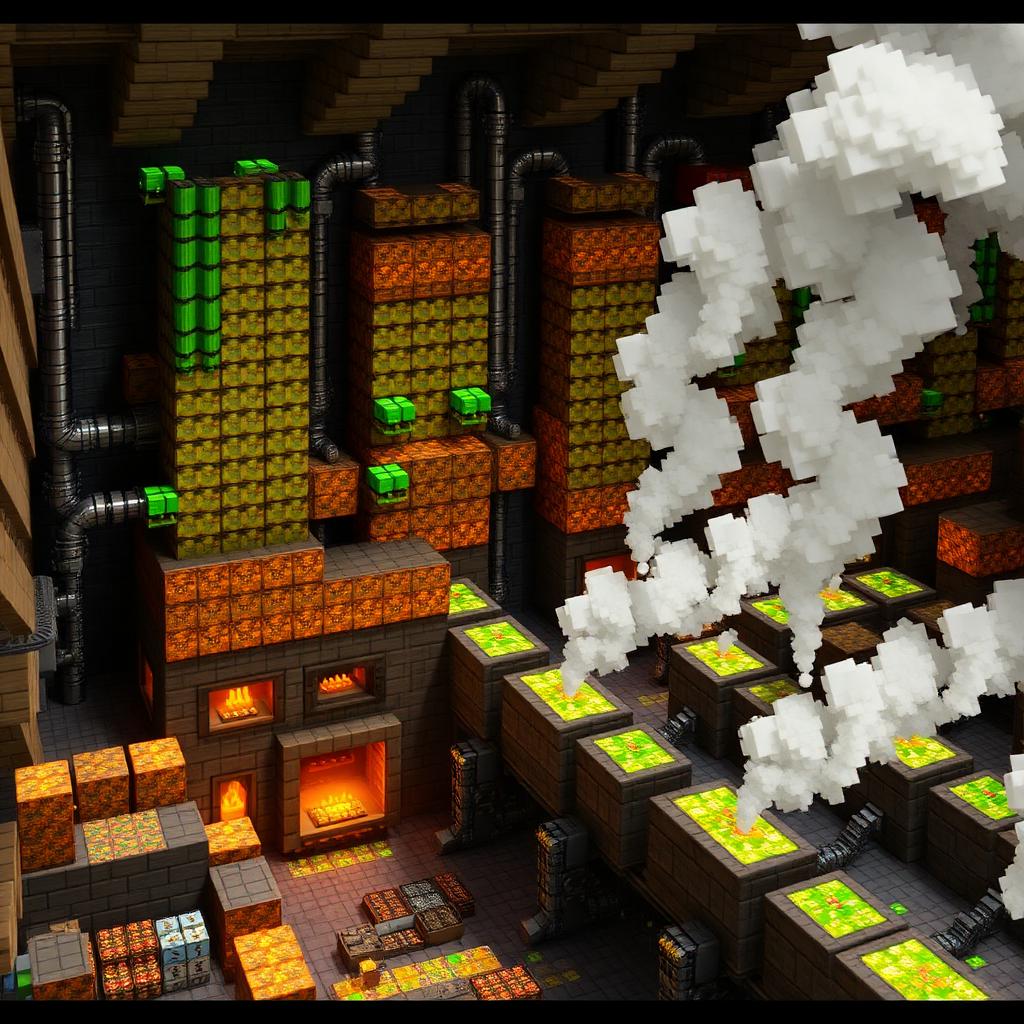
Bamboo and Kelp Hybrid Furnace Array
Introduction
How the Hybrid System Works
A bamboo and kelp furnace array combines renewable starter fuel with compact reserve fuel. Bamboo can burn directly, while harvested kelp must first be smelted into dried kelp. Nine dried kelp craft into one dried kelp block, which is the actual fuel. Raw kelp and individual dried kelp are not furnace fuels.
In current vanilla Java and Bedrock editions, one bamboo supplies enough burn time for one-quarter of a furnace operation; one dried kelp block supplies 20 operations. Smokers and blast furnaces work twice as quickly on eligible recipes but consume fuel twice as quickly, preserving the number of items processed per fuel. Smokers cook kelp and other food; blast furnaces cannot dry kelp and only accept their supported metal-related recipes. Ordinary furnaces provide the broadest compatibility.
Materials and Layout
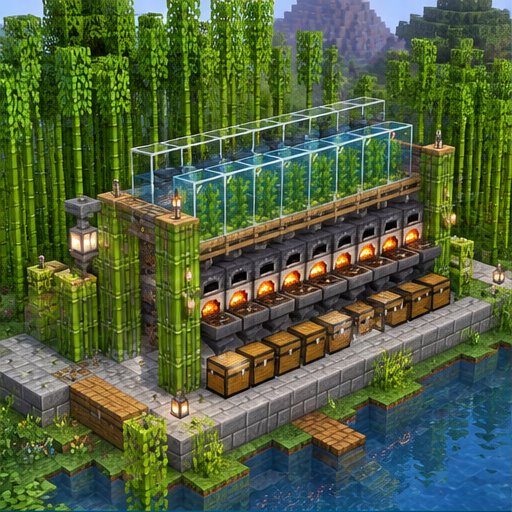
Start with four independent modules: two ordinary furnaces for general work and two smokers for drying kelp. Collect 12 hoppers and 12 chests: each module gets one input chest and hopper, one fuel chest and hopper, and one output chest and hopper. Also bring building blocks, lighting, bamboo, kelp, and a crafting table. Hoppers themselves require additional chests during crafting; the 12 storage chests listed here are separate.
Leave working space above, behind, and below the machines. Independent modules are easier to diagnose than a shared hopper bus, which can fill its nearest machines before supplying the rest. This starter design uses manually divided batches rather than promising automatic equal distribution.
Build and Validate the Array
Step 1: Place two furnaces and two smokers in a row, leaving enough separation to access their chests. Put an output chest below and in front of each machine. Sneak-place a hopper pointing into that chest, then place the machine directly on the hopper. Keep chest lids unobstructed. The bottom hopper extracts processed items automatically.
Step 2: Place a hopper pointing downward into the top of each machine, with an input chest above it. Top insertion supplies the ingredient slot. Put another hopper against the rear or side, pointing into the machine, and place a fuel chest above that hopper. Side insertion supplies the fuel slot. Check hopper spouts carefully: a hopper facing away from a furnace will not feed it.
Step 3: Test one module before loading the array. Put eight raw kelp in a smoker’s input chest and 32 bamboo in its fuel chest. With uninterrupted operation, that is enough bamboo to dry the batch. Confirm that dried kelp reaches the output chest. If nothing moves, check hopper orientation and remove nearby redstone power, which can lock hoppers. Repeat a small compatible recipe test in each ordinary furnace.
Step 4: Establish a dependable bamboo supply. Plant bamboo on suitable blocks such as dirt, leaving vertical growing space and adequate light. Harvest upper stalks while preserving the bottom segment for regrowth. An observer-and-piston farm can automate harvesting through normal growth, but collection losses and growth rates vary with layout and simulation settings. Begin manually; do not size the array around advertised zero-tick output.
Step 5: Grow kelp in a contained water column on a suitable underwater support block. Leave the lowest kelp block intact when harvesting so it can regrow. Collect loose drops before they despawn. For automation, use a design intended for your edition and verify that broken kelp actually reaches collection storage; flowing water, source-water placement, and harvesting arrangements matter. Feed harvested kelp only to the drying smokers.
Step 6: Bootstrap the drying line with bamboo. Collect dried kelp, craft blocks in batches of nine, and move those blocks into fuel storage. Keep some bamboo available for restarts. On versions supporting the crafter, automatic block production is possible, but it needs a separate, validated crafting and transfer circuit. On older versions, manual crafting is the straightforward alternative.
Step 7: Establish a reserve before exporting fuel. One dried kelp block can dry 20 kelp during continuous operation. Nine of those dried kelp replace the burned block, leaving 11 dried kelp toward additional fuel. This is a processing balance, not free production: the farm must still supply raw kelp. Repeated short batches waste remaining burn time after inputs run out, reducing practical efficiency.
Fuel Distribution and Troubleshooting
Use bamboo for startup and small jobs, then load dried kelp blocks for sustained batches. Do not expect one fuel chest containing both items to provide intelligent switching. A furnace has one fuel slot, and unlike fuel types cannot stack there together. For predictable operation, let existing fuel clear before changing types, or dedicate separate machines to each fuel.
Divide ingredients and fuel among modules yourself initially. Keep drying outputs separate from general products so iron, glass, and food cannot contaminate the fuel-crafting workflow. If output storage fills, extraction stops and eventually processing stalls. Add storage before long sessions, and provide an accessible farm shutoff rather than letting overflow accumulate as dropped items.
If production cannot keep up, reduce the number of active machines first. Crops need appropriate loaded and ticking conditions to grow; a distant farm is not automatically supplying fuel. Test a full batch while standing near both farms and the array. Java and Bedrock redstone designs are not universally interchangeable, and server plugins may alter hopper behavior or furnace recipes. Validate automation in a creative copy where available; otherwise, this manually supplied four-module layout remains a practical fallback.
Please support us by visiting one of our partners: Amazon