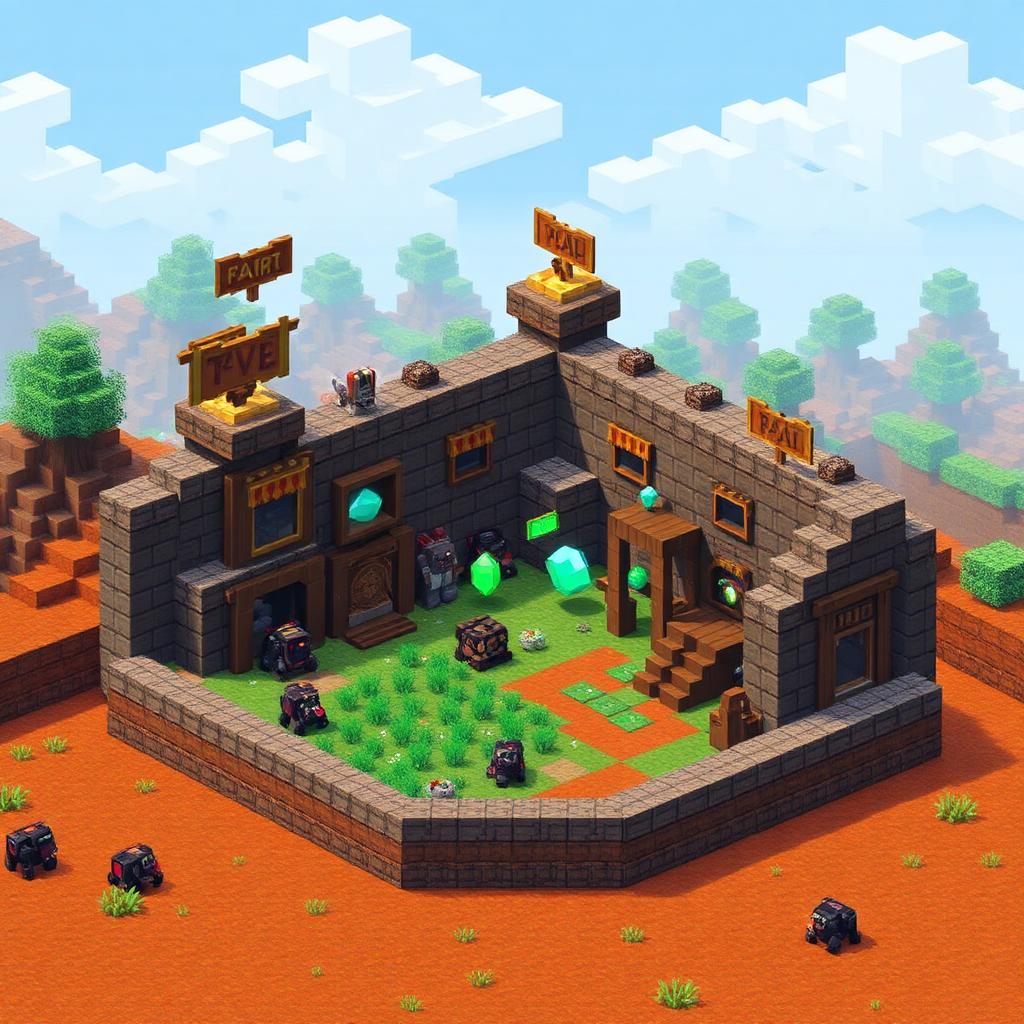
Charged Creeper Farm with Lightning Rods
Introduction
What This Farm Actually Does
A charged creeper farm is best treated as a storm-powered charging station followed by a separate, controlled explosion chamber. Lightning rods do not generate lightning or guarantee thunderstorms. They attract nearby natural lightning, and a Channeling trident can summon lightning under the correct conditions. A creeper struck by lightning becomes charged, shown by its blue electrical aura.
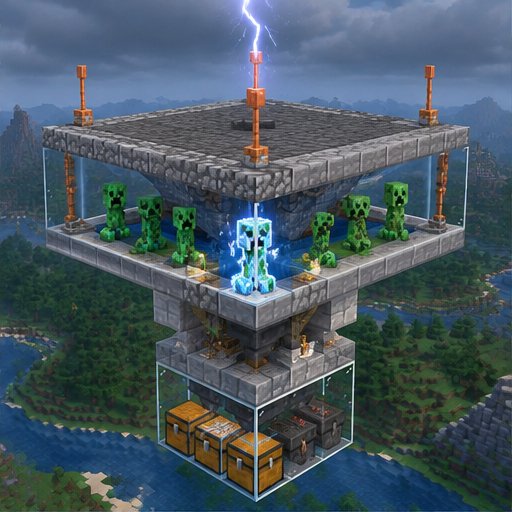
The practical survival design is small and batch-operated: capture one creeper, charge it, introduce a suitable target, and detonate behind protection. This is not an unattended head factory. Thunderstorm availability, mob handling, and explosion safety determine how useful it will be.
Materials and Site Preparation
For one charging cell, gather one lightning rod, three copper ingots if crafting that rod, an anvil and name tag, building blocks, gates or other controlled entrances, and water buckets. For the explosion station, collect obsidian for a reusable enclosure and protective wall, plus flint and steel for deliberate ignition. Rails and minecarts can make individual mob transfers easier, but are optional.
A Channeling trident is strongly recommended for repeatable charging during thunderstorms. Loyalty helps recover thrown tridents; Riptide cannot coexist with Channeling in normal survival. Bring armor, food, spare blocks, and a shield, but never treat a shield as your only protection from a charged explosion.
Build outdoors in the Overworld, away from homes, animals, villagers, wooden structures, and storage. Lightning rods arrived in Java and Bedrock 1.17. Older versions need a different setup. Server plugins may disable lightning, explosions, or mob griefing, so verify local rules before investing resources.
Build and Validate the Charging Cell
Step 1: Prepare a level work area with an unobstructed view of the sky. Light the surrounding terrain to reduce unwanted hostile spawns, and fence off your approach. Leave the charging cell open above: a protective roof can prevent the lightning interaction you need. Do not place the station beneath an overhang and assume rain reaching nearby blocks is sufficient.
Step 2: Construct a narrow, two-block-deep holding pit with solid walls and no steps that let a creeper climb out. Place the lightning rod upright immediately beside the cell, with its tip close to the creeper’s body rather than high on a decorative tower. Lightning must strike close enough to charge the creeper; an elevated rod can attract lightning without charging the captive below.
Step 3: Arrange a controlled entry route. For a first build, lure one naturally spawned creeper toward an open trapdoor over the pit, then retreat before its fuse finishes. Keep an escape route clear, and avoid standing on the rim afterward. A minecart transfer is another option, but confirm your release arrangement before moving a valuable charged creeper.
Step 4: Apply a name tag using a protected access opening, then close it. Naming prevents normal distance-based despawning; it does not protect against explosions, lightning damage, or Peaceful difficulty. Do not rely on boats or minecarts alone as an edition-independent persistence method. Keep only one creeper in the cell while validating the design.
Charge the Creeper During a Thunderstorm
Step 5: Wait for an actual thunderstorm. Ordinary rain is not enough for Channeling. Throw the Channeling trident at the exposed lightning rod from a secure position. In current vanilla Java and Bedrock, a suitable rod hit during a thunderstorm can summon lightning. Directly hitting the creeper is another method, but adds trident damage and has entity-condition caveats; the rod is the better starting point.
Step 6: Confirm the blue aura before doing anything else. Stop throwing once charging succeeds: repeated strikes can kill your captive. A little water in the holding area can help extinguish fire, but it must not wash the creeper out or make retrieval unsafe. Natural lightning is a slower alternative; rod attraction ranges differ between editions, and no placement guarantees a strike during a particular storm.
Collect Heads Without Exposing Your Base
Step 7: Build a separate obsidian explosion chamber with a protected approach and a nearby retreat position behind a continuous, substantial obsidian wall. Keep the ignition opening away from the retreat side so there is no direct line through it. Obsidian resists the explosion, but openings can still expose you. Water limits block destruction; it does not make the blast harmless to entities.
Step 8: Move in the charged creeper and one eligible victim, such as a zombie, skeleton, or ordinary creeper. Keep the victim close enough to die in the explosion, and protect zombies and skeletons from daylight while staging them. The charged creeper’s explosion must deliver the killing blow. In Java, one charged explosion produces at most one eligible mob-head drop; Bedrock can produce multiple. Start with one victim regardless.
Step 9: Test the complete ignition-and-retreat arrangement in a Creative copy of the world before attempting it in survival. Flint and steel ignites a creeper directly, leaving only a short fuse. Your retreat must be an immediate move behind proven cover, not a long sprint. Keep all other players and mobs well away. After detonation, check for surviving hostiles before entering to retrieve the head.
Troubleshooting and Practical Alternatives
No lightning usually means ordinary rain, blocked sky access, a missing Channeling enchantment, or server restrictions. Lightning without charging suggests excessive separation between the rod tip and creeper. A missing head usually means an ineligible victim, a surviving target, another damage source delivering the final blow, or Java’s one-head limit.
If storms or server settings make charging unreliable, retain a simple manual capture pen and use it opportunistically rather than building automatic sorting. Obtain decorative heads through other legitimate survival sources where available; not every head type requires a charged creeper.
Please support us by visiting one of our partners: Amazon