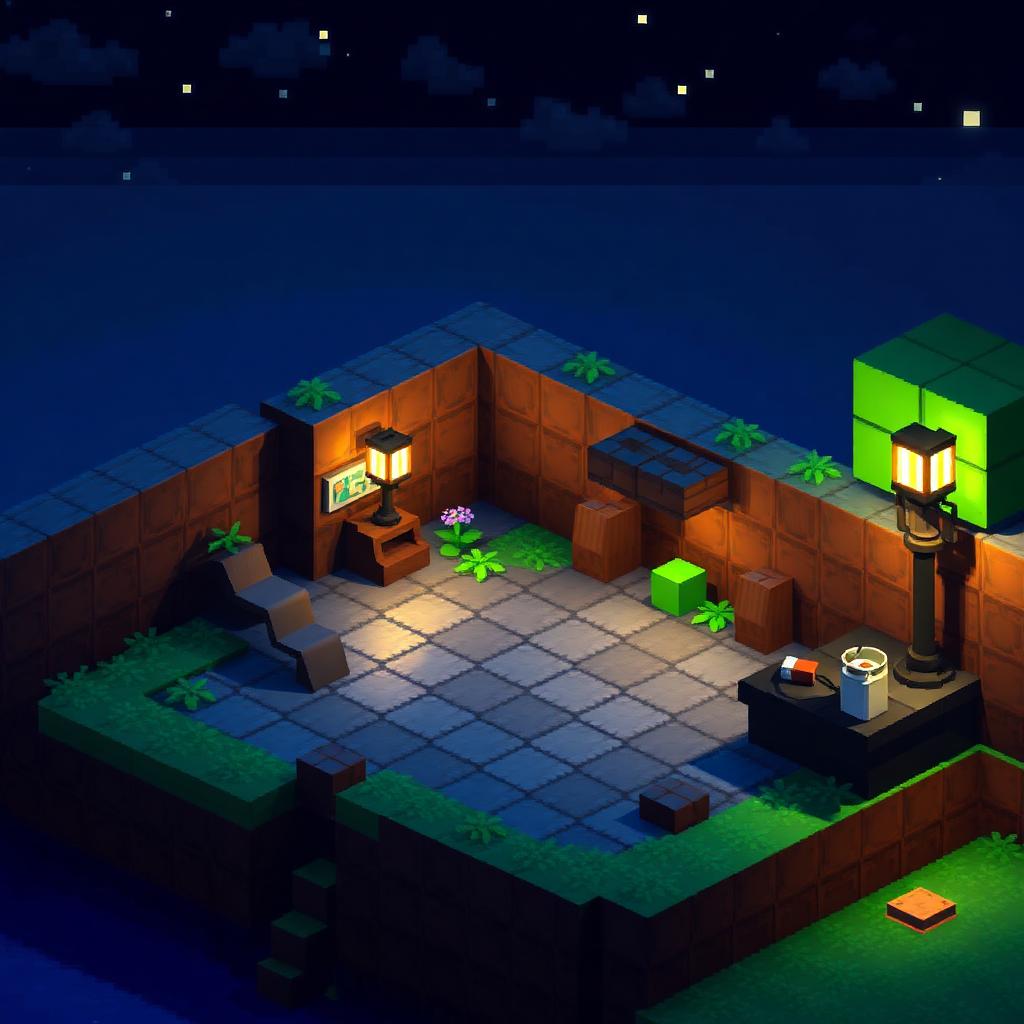
Mob Cap Friendly Base Design
Introduction
What a Mob-Cap-Friendly Base Actually Does
A mob-cap-friendly base reduces unwanted natural spawning around the places where you spend time. This improves safety and can leave more spawning capacity available for a nearby hostile-mob farm. It does not push mobs toward that farm: Minecraft checks spawning conditions around players, and eligible surfaces elsewhere can compete with the farm.

The practical goal is to deny unwanted spawning spaces, separate your living area from the farm’s operating area, and choose an AFK position that keeps the farm active without activating unnecessary caves. This guide targets ordinary Overworld hostile-mob farms; special spawning systems need their own rules.
Understand the Limits Before Building
Java and Bedrock do not use identical mob-cap systems. Java has category caps and multiplayer spawning rules that consider eligible chunks and nearby players. Bedrock also uses population-control and density rules. Do not assume a Java perimeter layout will produce the same result in Bedrock.
For ordinary naturally spawned hostile mobs in Java, spawning generally requires a location more than 24 blocks from a player, while mobs farther than 128 blocks from the nearest player normally despawn. These are three-dimensional distances, not just horizontal measurements. The relevant chunks must also be ticking.
In Bedrock, simulation distance is particularly important. At simulation distance 4, ordinary natural spawning is generally restricted to approximately 24–44 blocks from players. Higher simulation distances allow larger operating areas, but spawning and despawning limits still need checking for the specific farm and version. Render distance is not a substitute for simulation distance.
Materials and Layout
Gather torches or other dependable light sources, bottom slabs, solid building blocks, doors or fence gates, and fences or walls for access control. Add signs for marking the farm’s AFK position and collection route. The quantities depend on your terrain, roof area, and cave network; there is no reliable universal materials total.
Use bottom slabs as the default permanent surface treatment. Top slabs and double slabs can support ordinary mob spawning. Buttons are not a dependable cross-edition substitute for spawn-proof flooring. Walls and fences keep many mobs out, but they do not stop spawning inside an enclosure.
Step-by-Step Construction
Step 1: Identify the farm’s actual operating area. Record your edition, version, simulation distance, and whether server plugins change spawning. Mark the spawning platforms, killing area, and intended AFK position. If the farm is not built yet, choose its location before investing in a large base perimeter.
Step 2: Establish a secure home zone. Enclose your courtyard, connect buildings with protected walkways, and close entrances with doors or gates. Light the ground, interiors, roof recesses, and spaces beneath stairs. In modern Java and Bedrock, most ordinary Overworld hostile mobs require block light level 0 to spawn, but exceptions exist. Do not apply that rule to every dimension or special mob.
Step 3: Replace exposed spawning surfaces selectively. Use bottom slabs on flat roofs, wall tops, maintenance platforms, and decorative ledges that are difficult to illuminate. Check slab placement carefully: a slab occupying the upper half of a block space is not equivalent. Keep paths illuminated even when their flooring is spawn-proof, because mobs can still walk onto them from elsewhere.
Step 4: Audit underground spaces within the farm’s operating range. Light accessible caves, abandoned mining rooms, and cavities behind retaining walls. In Java, the F3 display can help check local block light; Bedrock’s standard interface does not provide the same readout. Inspect actual surfaces rather than trusting how bright your screen looks. A safe courtyard does not prevent dark caves below it from competing with a farm.
Step 5: Choose the AFK position using distance, not convenience. Keep every intended spawning platform outside the player’s spawn-exclusion radius and within the edition’s working range. Keep the mobs’ travel route and killing chamber within appropriate despawning and ticking limits too. An elevated AFK position can exclude ground-level caves, but moving too high can also disable lower farm platforms.
Step 6: Separate vertical layers deliberately. Put living rooms, storage, and access passages on lit or bottom-slabbed floors. Keep the farm’s spawning chamber dark only where its design requires darkness. Vertical stacking alone does not create separate caps or isolate a farm: dark rooms directly beneath your storage can still compete when they fall within range.
Step 7: Protect collection and maintenance. Provide an enclosed route to storage and a clearly marked AFK platform. Size storage for your planned sessions and provide an overflow strategy that prevents loose items accumulating. Avoid leaving ordinary hostile mobs indefinitely in holding chambers, where they may consume spawning capacity. Persistence and cap treatment vary by mob and edition.
Validate Safely and Troubleshoot
First back up the world or inspect a separate creative copy. In survival, perform short, supervised tests from the marked AFK spot with identical difficulty, simulation distance, and player positions. Empty collection storage before each test. Compare results before and after treating one area; do not expect a guaranteed item rate.
If spawning is poor, check Peaceful difficulty, server restrictions, platform lighting, player distance, and whether farm chunks are ticking. Then investigate caves and nearby players. Multiplayer activity can change spawning opportunities, so a solo test is not a promise of server performance.
If mobs appear at home, inspect top slabs, dark ledges, open entrances, and untreated caves. Slime chunks, swamp slime spawning, and patrols need separate consideration; ordinary lighting advice is not universal. If base-wide spawn-proofing is impractical, use a separate farm location with a verified AFK position, leaving your home primarily designed for safety.
Please support us by visiting one of our partners: Amazon