Axolotl and Glow Squid Aquarium
Introduction
Introduction
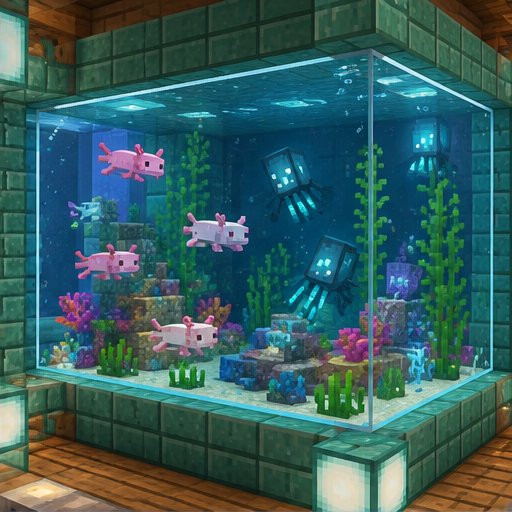
An axolotl and glow squid aquarium can combine an attractive survival display with occasional glow ink collection, but the animals are not peaceful tankmates. Axolotls attack glow squid, so a shared tank is a hunting enclosure rather than a permanent mixed exhibit. The most practical design uses layered, separated tanks: a visible axolotl habitat and a dark glow squid chamber below it, with controlled access if you want the axolotls to hunt.
How It Works
Glow squid drop glow ink sacs when killed. Axolotls can kill them, but they have a cooldown between hunting non-hostile aquatic targets, so adding one does not create continuous ink production. Natural spawning also depends on depth, darkness, player position, available spawning capacity, and edition-specific rules. Treat this as a small aquarium with a possible ink supply, not a guaranteed high-output farm.
Glow squid look luminous but do not illuminate surrounding blocks. You cannot collect them in a bucket or breed them. Axolotls, by contrast, can be transported in water buckets; bucket-collected axolotls placed back into water do not naturally despawn. Naming a glow squid prevents ordinary despawning, but does not protect it from an axolotl.
Materials and Layout
For a manageable first build, plan a lower chamber with an internal water space approximately five blocks long, five wide, and three deep. Add a separate upper or adjacent axolotl display. Gather glass, opaque building blocks, ordinary stone for the lower floor, several water buckets, an axolotl in a bucket, and accessible maintenance doors outside the tanks. Bring a chest for ink and spare buckets for recovering axolotls.
Optional equipment includes a hopper and chest for a tested collection outlet, tinted glass for viewing a dark chamber, and name tags for permanent display squid. Tinted glass blocks light; ordinary glass does not. Do not commit to a large hopper floor before checking whether items actually reach it.
Step-by-Step Construction
Step 1: Choose depth before decoration. In modern Java Edition, natural glow squid spawning requires water below Y=30 and complete darkness. Bedrock also uses below-Y=30, darkness-related conditions, and additional natural-stone proximity requirements. Use an ordinary stone floor and keep the small spawning chamber close to it, then check the rules for your particular Bedrock version before expanding. Older releases and modified servers may behave differently.
Step 2: Build the lower shell with an opaque roof and enclosed walls. Keep the entire intended spawning volume below Y=30 rather than placing only its floor there. Add an external maintenance corridor, and keep its lighting from entering the tank. A tinted-glass viewing wall is useful; otherwise, use an opaque shutter that stays closed during spawning tests.
Step 3: Fill the chamber with source water. Work layer by layer so the interior does not consist mainly of falling streams. Leave enough clear water for squid movement, and avoid cramped decorative pockets where they can become stranded. Build the separate axolotl display with its own watertight floor and walls. Any passage connecting the tanks should initially be blocked with solid blocks.
Step 4: Validate spawning before adding a hunter. Close light leaks, remove temporary underwater lights, and watch from a suitable distance. Standing beside the tank usually prevents natural spawning nearby. In Java, start with a waiting position more than 24 blocks from the spawning water while keeping the chamber comfortably within the normal 128-block despawn boundary. Bedrock spawning and despawning distances vary with simulation distance, so use edition-specific guidance rather than copying a Java AFK position.
Step 5: Introduce one bucket-collected axolotl only after squid appear. Place it directly into water and observe its movement and attacks. Keep a water bucket ready to remove it if you want to preserve a squid or inspect the chamber safely. Do not use magma blocks, exposed drops, or drying channels as collection shortcuts inside the animal habitat.
Step 6: Begin with manual ink collection. Dropped items tend to rise in still water, so a hopper underneath the tank floor is not a reliable collector. After a kill, retrieve the ink promptly through a safe access point. If automating, test a surface-current arrangement leading toward a contained, shallow collection pocket with a hopper feeding a chest. The hopper must actually receive the items; it cannot pull them through an ordinary full-block floor.
Step 7: Test collection with a few expendable dropped items before relying on ink. Watch for floating items caught against walls, decorative blocks, or still-water corners. Keep the outlet enclosed so animals cannot escape, and maintain access to clear blockages. Label the storage chest and empty it regularly; a full chest stops collection rather than providing overflow protection.
Troubleshooting and Alternatives
If no squid appear, check actual water height, darkness, stone proximity on Bedrock, player distance, and whether the chamber remains simulated. Nearby underground water may compete for spawning opportunities. Multiplayer activity, plugins, and server mob limits can also change results. Test changes individually, ideally in a separate copy before rebuilding in survival.
If natural spawning remains unreliable, keep the axolotl aquarium purely decorative and gather glow ink while exploring underground water. For a permanent mixed-looking display, separate the species with glass and name the display squid. Guide squid through enclosed water channels rather than attempting to bucket them. Light the surrounding walkways and prevent hostile spawning outside the chamber, but keep the spawning water itself dark.
Please support us by visiting one of our partners: Amazon